

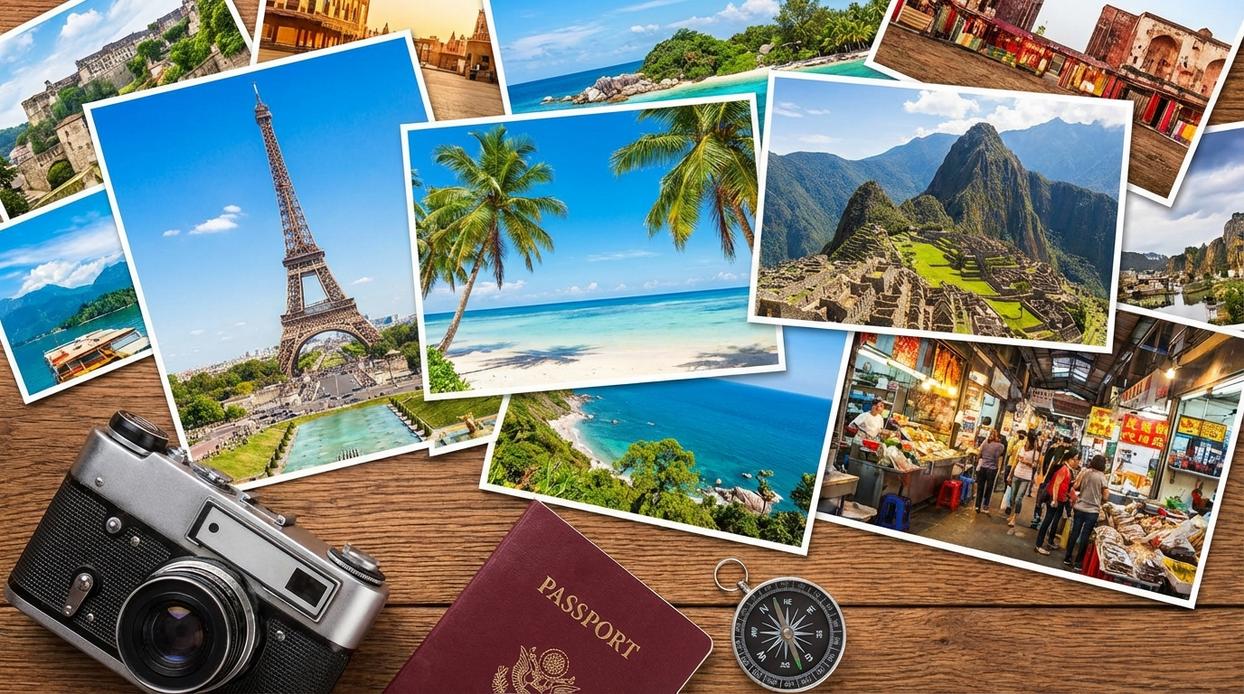
Dreaming of your next escape but not sure where to begin? This guide is designed to help you discover top wanderlust destinations while giving you the practical tools to turn inspiration into a well-planned adventure. Whether you’re craving cultural immersion, adrenaline-filled experiences, or budget-friendly global exploration, you’ll find curated insights that match exactly what you’re searching for: clear, actionable travel guidance you can trust.
We’ve carefully analyzed current travel trends, local insights, and proven planning strategies to ensure every recommendation is both inspiring and realistic. From smart budgeting tips to immersive cultural experiences and step-by-step adventure planning strategies, this article cuts through the noise to deliver meaningful, experience-driven travel advice.
If you’re looking for more than just a list of places — and instead want guidance on how to explore them confidently and affordably — you’re in the right place.
Travel doesn’t have to mean choosing between hiking boots and museum passes. The magic happens where landscape and legacy intertwine—a concept we call “place synergy,” meaning culture shaped directly by its environment. Think of New Zealand’s Māori traditions framed by fjords worthy of The Lord of the Rings, or Peru’s Sacred Valley where Incan history rises from Andean peaks.
However, many itineraries split these experiences apart. Instead, focus on top wanderlust destinations that blend both seamlessly. Pro tip: plan slow travel days to absorb context, not sights. Ultimately, the best journeys feel less like postcards and more like living stories.
Peru: Ancient Trails and Sacred Andean Peaks
Peru delivers a rare dual experience: raw Andean wilderness intertwined with the enduring brilliance of Inca engineering. It’s where thin mountain air sharpens your senses and 15th-century stonework still defies earthquakes (literally—Machu Picchu’s ashlar masonry was built without mortar).
Hiking Above the Clouds
First, consider the Inca Trail—a 26-mile route climbing to Dead Woman’s Pass at 13,828 feet. The altitude is real, but so is the reward: cloud forests draped in orchids, spectacled bears in protected zones, and sweeping views over snow-capped peaks. Alternatively, the Salkantay Trek offers glacial lakes and fewer crowds. These routes aren’t just scenic; they immerse you in shifting ecosystems within days, from subtropical greenery to alpine tundra.
Meanwhile, culture anchors every step. Machu Picchu, likely a royal estate of Emperor Pachacuti (UNESCO), reflects precise astronomical alignment and sacred geography. In the Sacred Valley, Quechua communities preserve weaving traditions using natural dyes, while Cusco’s markets burst with choclo corn and handwoven textiles.
For a balanced 3-day plan: Day 1, acclimatize in Cusco (11,152 feet) and explore Sacsayhuamán. Day 2, visit Pisac and Ollantaytambo in the Sacred Valley. Day 3, take a short hike to Rainbow Mountain’s viewpoints or Huayna Picchu for panoramic impact. Pro tip: hydrate aggressively—altitude sickness can derail even seasoned travelers.
It’s no wonder Peru ranks among top wanderlust destinations for travelers craving both altitude and attitude.
Japan: Spiritual Forests and Timeless Traditions
Japan offers a rare dual experience: spirituality woven directly into landscape. In many top wanderlust destinations, nature is a backdrop. Here, it’s the main character.
Take Arashiyama Bamboo Grove versus a typical city park. A park offers greenery; Arashiyama immerses you in towering bamboo that sways and whispers overhead (yes, it really does sound like nature’s wind chime). Similarly, walking the forested trails of Fushimi Inari Shrine—beneath thousands of vermilion torii gates—feels entirely different from visiting a standalone monument. One is a structure; the other is a journey.
This connection stems from Shinto and Buddhist traditions. Shinrin-yoku, or “forest bathing,” means mindfully absorbing the forest atmosphere—a practice shown to reduce stress hormones like cortisol (Japanese Ministry of Agriculture, Forestry and Fisheries). Meanwhile, seasonal reverence shapes daily life: sakura (cherry blossoms) signal fleeting beauty in spring, while momiji (autumn leaves) celebrate change.
Compare ornate urban temples with Kyoto’s Zen gardens. The former impress with scale; the latter, with restraint—raked gravel and precisely placed stones designed for contemplation.
For deeper immersion, consider a shukubo (temple lodging). Overnight stays blend meditation, vegetarian cuisine, and morning chants—an experience far richer than a daytime visit alone.
Jordan: Desert Vistas and Nabatean Wonders
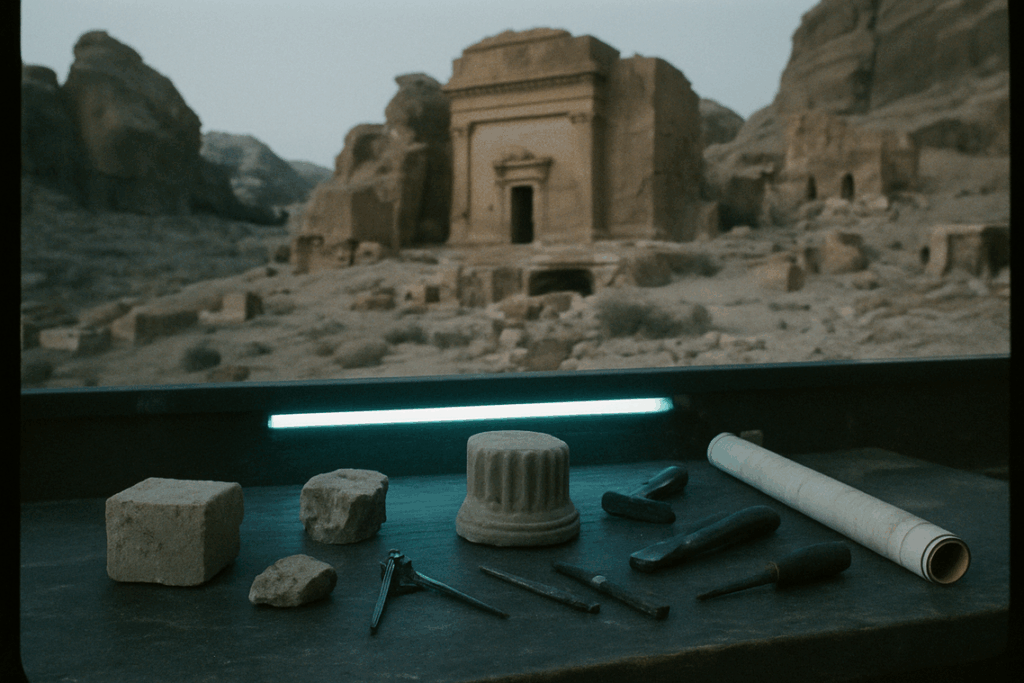
Jordan offers a rare duality: raw nature and refined ancient engineering within hours of each other. In Wadi Rum, red الرمال stretch toward sandstone monoliths that glow at sunset. Wind has sculpted arches and cliffs over millennia, creating a Martian-like panorama (yes, The Martian was filmed here). By night, the silence deepens and the sky erupts with stars—minimal light pollution makes it one of the Middle East’s finest stargazing sites (Royal Astronomical Society reports deserts offer optimal visibility due to dry air).
From Siq to Treasury: A Timeless Reveal
Petra, built by the Nabateans—an Arab trading civilization thriving around the 4th century BCE—reveals itself slowly. The Siq (a narrow sandstone gorge) funnels you forward until the Treasury bursts into view. It’s theatrical, intentional, unforgettable. While many guides stop at the façade, few explain the Nabateans’ advanced water-harvesting systems that sustained a desert metropolis—an engineering feat often overlooked.
Meanwhile, Bedouin communities still inhabit this landscape, preserving oral poetry, tea rituals, and desert navigation skills.
- Jeep across Wadi Rum’s red dunes
- Trek by camel at sunrise
- Explore Petra’s Royal Tombs beyond the Treasury
- Sleep in a traditional desert camp
Actionable Tip: Visit Petra by day, then overnight in Wadi Rum for full immersion. Pair this journey with insights on how to turn wanderlust dreams into real world adventures and elevate one of the top wanderlust destinations into lived experience.
New Zealand: Maori Heritage and Mythical Landscapes
New Zealand feels like stepping into a living legend. Towering fjords slice through the earth at Fiordland National Park, where Milford Sound’s cliffs rise straight from inky water. Further north, Rotorua’s geothermal parks hiss and bubble, while Aoraki/Mount Cook pierces the alpine sky like a frozen spear. It’s no wonder this land ranks among the top wanderlust destinations for nature lovers.
But here’s what many travelers miss: these landscapes are not just scenic—they’re ancestral. In Māori tradition, Aoraki is a revered ancestor, turned to stone after a celestial voyage went wrong. “When you look at the mountain,” a local guide once told me, “you’re looking at family.” That perspective changes everything.
Similarly, Rotorua’s steaming valleys are tied to the legend of Ngātoroirangi, a priest who called on sacred fire to save him from freezing—explaining the region’s geothermal activity (according to Māori oral histories recorded by the New Zealand Ministry for Culture and Heritage).
During a hāngi—food slow-cooked underground—a host smiled and said, “We don’t just share a meal; we share our story.” Visiting a marae (tribal meeting grounds) reinforces that connection.
So, consider booking a guided walk led by a Māori storyteller. The land speaks—but with the right guide, you’ll finally understand what it’s saying.
Your Next Adventure Awaits
You no longer have to choose between a backpack and a history book. The world’s most rewarding journeys blend both. According to UNESCO, there are over 1,100 World Heritage Sites globally, many located in biodiversity hotspots—proof that culture and landscape often evolve together. The real challenge? Finding places where the terrain shapes tradition.
Focus on Peru, Japan, Jordan, and New Zealand—frequently ranked among the top wanderlust destinations for their fusion of nature and heritage. • Peru’s Andes cradle Machu Picchu. • Jordan’s desert preserves Petra’s rose-red facades. These landscapes don’t just impress—they explain.
Choose the story you want to walk inside, and start planning.
Ready to Turn Your Travel Dreams Into Reality?
You came here looking for clarity, inspiration, and practical guidance for planning unforgettable adventures — and now you have it. From smarter budgeting strategies to immersive cultural experiences and top wanderlust destinations, you’re equipped with the insight to travel with confidence instead of confusion.
The biggest frustration for passionate travelers isn’t lack of desire — it’s not knowing where to start, how to plan efficiently, or how to make every dollar stretch further. Without the right strategy, dream trips stay stuck on vision boards.
Now it’s your move.
Start mapping out your next journey using the adventure planning and budgeting tips you’ve just learned. Explore new cultures intentionally. Choose destinations that align with your travel style and goals.
If you’re ready to stop dreaming and start booking, tap into the trusted travel guides and planning resources relied on by thousands of global explorers. Get the tools, create the plan, and take the first step toward your next unforgettable experience today.
 Syrelia Xelthorne is the kind of writer who genuinely cannot publish something without checking it twice. Maybe three times. They came to bianca voyage cultural immersions through years of hands-on work rather than theory, which means the things they writes about — Bianca Voyage Cultural Immersions, Global Travel Guides and Insights, Wanderlust Highlights, among other areas — are things they has actually tested, questioned, and revised opinions on more than once.
That shows in the work. Syrelia's pieces tend to go a level deeper than most. Not in a way that becomes unreadable, but in a way that makes you realize you'd been missing something important. They has a habit of finding the detail that everybody else glosses over and making it the center of the story — which sounds simple, but takes a rare combination of curiosity and patience to pull off consistently. The writing never feels rushed. It feels like someone who sat with the subject long enough to actually understand it.
Outside of specific topics, what Syrelia cares about most is whether the reader walks away with something useful. Not impressed. Not entertained. Useful. That's a harder bar to clear than it sounds, and they clears it more often than not — which is why readers tend to remember Syrelia's articles long after they've forgotten the headline.
Syrelia Xelthorne is the kind of writer who genuinely cannot publish something without checking it twice. Maybe three times. They came to bianca voyage cultural immersions through years of hands-on work rather than theory, which means the things they writes about — Bianca Voyage Cultural Immersions, Global Travel Guides and Insights, Wanderlust Highlights, among other areas — are things they has actually tested, questioned, and revised opinions on more than once.
That shows in the work. Syrelia's pieces tend to go a level deeper than most. Not in a way that becomes unreadable, but in a way that makes you realize you'd been missing something important. They has a habit of finding the detail that everybody else glosses over and making it the center of the story — which sounds simple, but takes a rare combination of curiosity and patience to pull off consistently. The writing never feels rushed. It feels like someone who sat with the subject long enough to actually understand it.
Outside of specific topics, what Syrelia cares about most is whether the reader walks away with something useful. Not impressed. Not entertained. Useful. That's a harder bar to clear than it sounds, and they clears it more often than not — which is why readers tend to remember Syrelia's articles long after they've forgotten the headline.